Somatic Safety Massage in Darmstadt – Proven Way to Lasting Recovery
What Happens When Your Body Finally Trusts Again
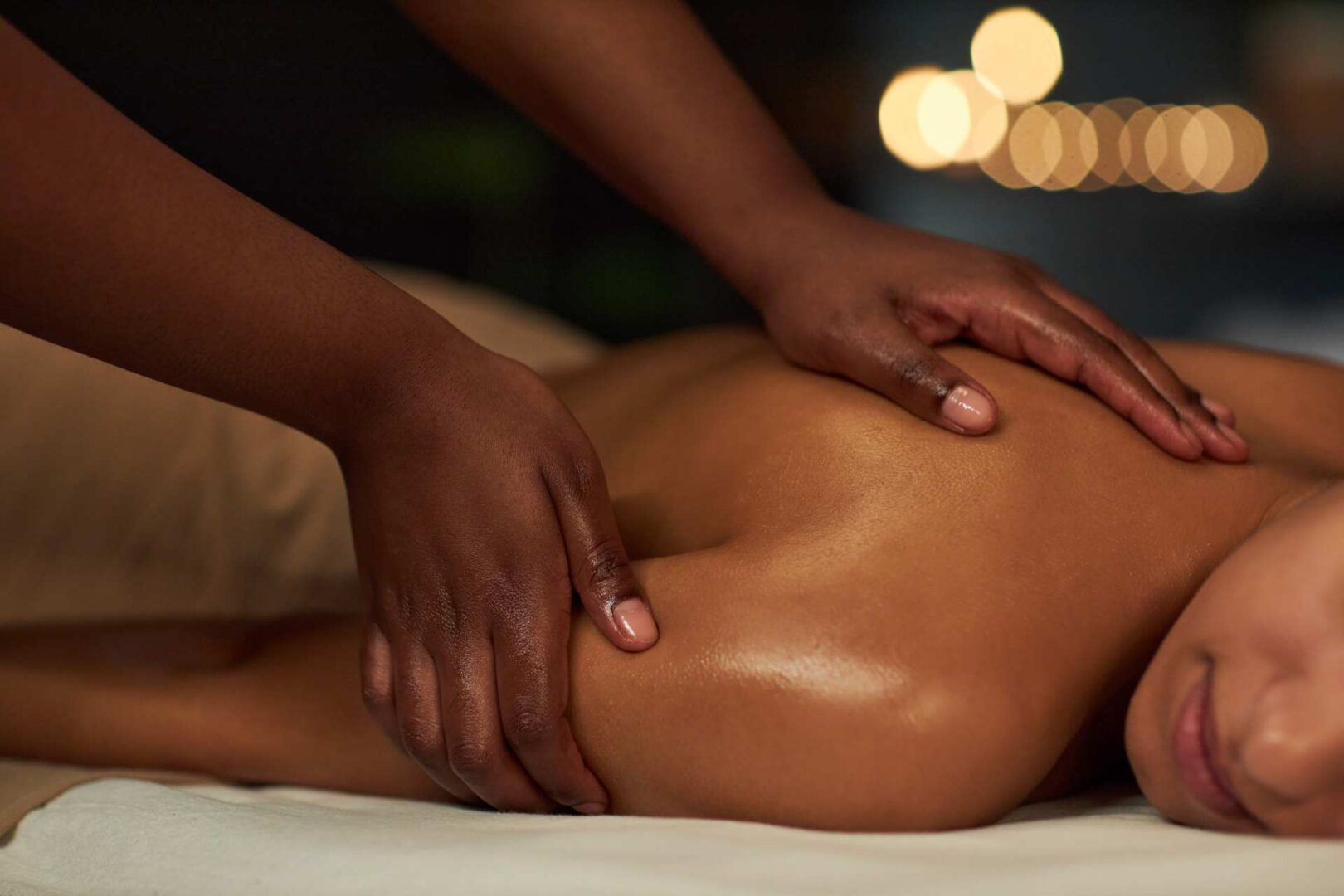
The Touch Ritual is more than just a massage. It’s the moment your nervous system decides it can finally stop bracing for impact. I’ve seen men arrive tense enough to feel like a coiled spring. Shoulders high, breath shallow, eyes scanning the room as if waiting for something to go wrong.
Then, weeks later, they sink into the table in a way that almost feels like gravity has doubled. The breath gets heavier. Sometimes there’s a single deep exhale, sometimes quiet tears. Either way, the body is finally saying, I’m safe now.
That’s the quiet power of somatic safety. The science behind it is more fascinating and messier than most articles admit.
When Your Body Becomes the Enemy and How Somatic Safety in Touch Can Help
Somatic safety might sound like some therapy buzzword, but it’s actually simple. It’s the point where your nervous system decides it’s okay to let go, a biological green light that’s vital for healing (Harvard Health). For many men carrying years of strain, tension, or trauma, that moment can feel out of reach.
I’ve worked with men who couldn’t stand a handshake without flinching. Others who moved through life as if their body was just a vehicle, disconnected from anything below the neck. Some had been in accidents and still felt the invisible jolt years later. Their nervous system’s mission was survival and it never got the memo that the danger had passed (National Library of Medicine).
“Somatic” comes from the Greek soma, meaning body. But here, we’re not talking about the body as a machine that needs a tune-up. We’re talking about the lived experience from the inside out the tight weight that anxiety leaves in your chest, the burn of frustration in your throat, the warmth of safety that spreads low in your belly.
If you’re curious about how this works in real touch therapy, explore The Soothe Room sessions and see how somatic safety is built into every moment.

Your Nervous System: The World’s Most Paranoid Security Guard
Forget the textbook version that paints the nervous system as calm and logical. In reality, your autonomic nervous system behaves more like an overzealous bodyguard, the kind who still thinks you’re in danger long after the threat is gone.
Researcher Dr. Stephen Porges introduced the Polyvagal Theory, which explains how your body’s built-in security system decides whether you feel safe or under attack. The star player here is the vagus nerve — a long, branching nerve that runs from your brain through your heart, lungs, and gut, influencing how every part of you responds to the world.
When this system believes you’re safe, your body runs like a well-tuned engine. Your breath slows, digestion works smoothly, muscles soften. But when it’s convinced you’re not safe, it locks down — no amount of “just relax” will change that.
That’s why in The Soothe Room, every movement, pause, and touch is designed to signal safety directly to your nervous system. Once it trusts you’re safe, your body finally has permission to release what it’s been holding for years.
The Safety Scanner (Neuroception)
Your nervous system runs its own silent security check about five times every second. You don’t consciously decide this — it’s happening far below awareness. The tilt of someone’s voice. The rhythm of their breathing. The subtle way they move in the space with you.
Long before I touch you in The Touch Ritual, your body is already making up its mind: Is she safe? Every detail matters. The way I approach the table. The steadiness in my hands. Whether my presence feels predatory… or deeply safe.
When a man tells me he felt safer in the first minute here than he has in years, it’s not magic. It’s neuroception — the built-in safety scanner of your nervous system giving the green light. Once that happens, your body opens the door to trust and real release.
The Three Gears Your Body Runs On
Your body has three main “gears” — and most men I see haven’t been in the good one for far too long.
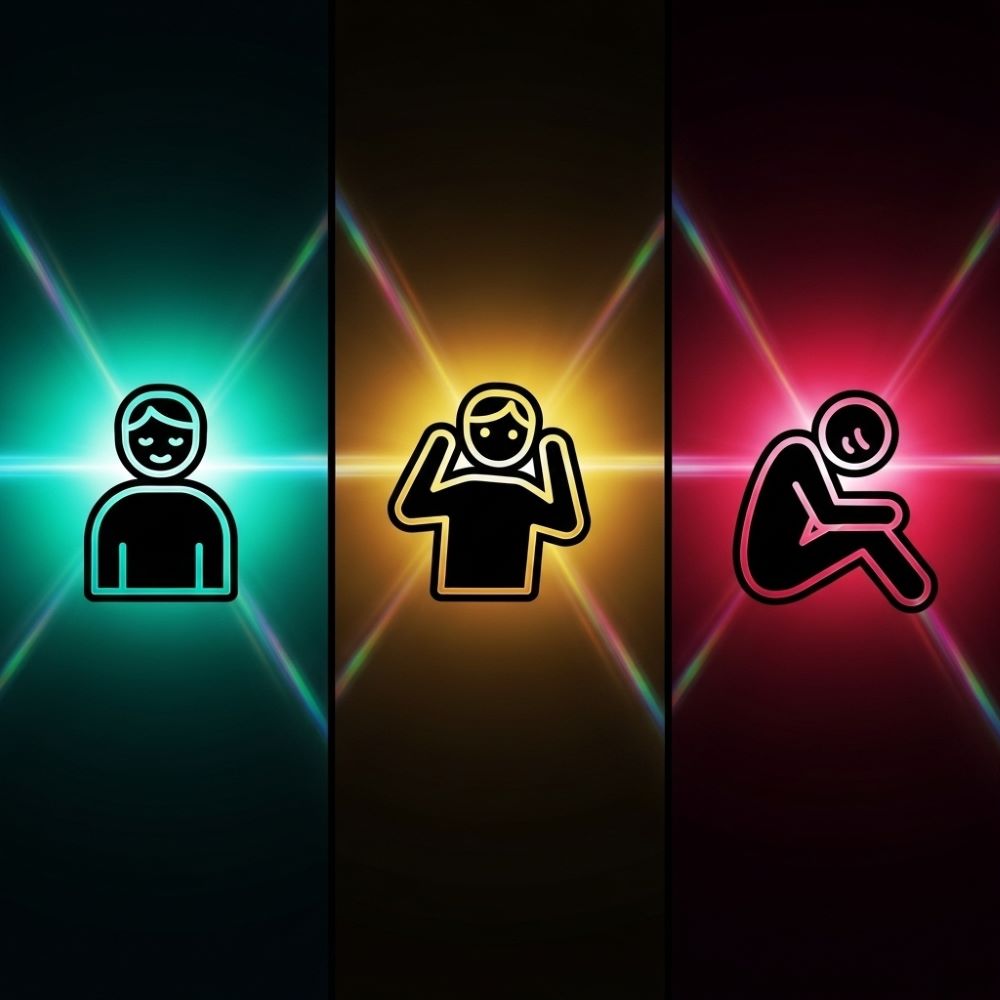
Green Zone (Ventral Vagal): You’re here, breathing slow, heartbeat steady. This is where your body can actually repair itself. In The Touch Ritual, this is the state we’re aiming for. For some men, it’s been years since they’ve truly felt it.
Yellow Zone (Sympathetic): Your fight-or-flight gear. Muscles on guard, pulse up, senses sharp. I see it in first sessions — men apologizing for being “too sensitive” when really, their body is just doing its job.
Red Zone (Dorsal Vagal): The shut-down gear. Everything slows or goes numb. You might feel spaced out, disconnected, even like you’re watching yourself from somewhere else. It’s not weakness. It’s your system’s last-ditch way of protecting you.
The turning point is helping your body find its way back into green — sometimes for the first time in decades. That’s where the real change begins.
The Body Keeps Score (Whether You Want It To or Not)
Bessel van der Kolk wasn’t exaggerating with that title — your body remembers everything. Even the parts you’ve worked hard to forget.
I once worked with a man who couldn’t stand anyone near his ribs. No obvious reason. No conscious memory. But the second my hands got close, his body went rigid. Later, he realised an old sports injury — and the way someone handled him during it — had left an imprint that never faded.
This is why some traditional massage can do more harm than good. Well-meaning therapists push through resistance thinking they’re “breaking up tension,” when really, they’re overriding the body’s safety system. It’s like forcing someone afraid of water into a pool — you can make them get in, but you haven’t made them feel safe there.
In The Soothe Room, safety isn’t something I assume — it’s something we build, moment by moment, so your body can finally stand down.

How Trauma Gets Stuck
Trauma isn’t always the headline event — it’s the unfinished business your body never got to complete.
Picture it like a track stuck on repeat. An accident. A fight. A medical procedure. Your nervous system slammed the emergency button… and sometimes, that button stays jammed for years.
Dr. Peter Levine saw this while studying animals. A gazelle outruns a lion, shakes violently for a few seconds, and then goes right back to grazing. That shake isn’t weakness — it’s the body clearing the leftover danger signal. Humans? We tend to skip that part. We overthink it, avoid it, bury it, medicate it — anything except actually let the survival energy finish its run.
Somatic work shows that trauma is often less about what happened, and more about the charge that never got released. Like a smoke alarm that won’t shut up long after the fire’s out, your nervous system keeps screaming even when you’re safe.
What Actually Happens During Safe Touch (The Science Gets Wild)
When touch therapy lands in that rare zone of true somatic safety, your body throws a chemical celebration. But here’s the catch — it only happens if your nervous system gives the green light.
The Chemistry of Connection
Oxytocin gets called the “love hormone,” but think of it more as your nervous system’s chill switch. In the right conditions, safe touch can release it in waves — slowing your heart, easing tension, softening that guarded edge.
But there’s no shortcut. If your body senses even a hint of danger, that oxytocin stays under lock and key. This is why two clients can receive the exact same massage — one melts into the table, the other feels more wound up than when they arrived. The difference isn’t the hands. It’s the body’s trust in the moment.
Rewiring Your Internal Map
Interoception is your built-in radar for what’s happening inside you — hunger, tension, warmth, pain. When trauma scrambles that system, it’s like walking around with the wires crossed. You stop noticing when you’re hungry, when you need to rest, even when something hurts.
Safe, attuned touch helps re-tune that radar. Men often tell me after a session, “I can actually feel my chest again,” or “I didn’t realize how tight my gut was until it softened.” These aren’t small wins. They’re signs your body is letting you back in after years of being locked out.
Building Nervous System Muscle Memory
The more often your body experiences safe, steady touch, the better it gets at finding its way back to calm. Scientists call this “vagal tone” — your nervous system’s bounce-back strength. Think of it as training your body to recover from stress like an athlete recovers after a workout.
Some men tell me that after a few sessions, they start noticing shifts outside the massage room. A handshake feels warmer. A partner’s arm around their shoulder doesn’t trigger that automatic flinch. It’s not magic — it’s your nervous system learning a new, safer rhythm.

The Art of Not Pushing Rivers
Touch isn’t a battle to win. If you try to force the body open, it just builds stronger locks. Real skill is knowing when to pause, when to wait, and when to follow the smallest shift in breath or muscle tone.
Sometimes the most powerful change happens in stillness — when nothing is “done” to you, yet everything starts to move on its own.
Reading the Room (Literally)
I notice things most people miss. The way your breath moves — quick and tight tells me you’re bracing for something, long pauses tell me you’ve gone quiet inside.
Your skin talks, too. Some people flush when emotion rises, others go pale. I’ve seen ears turn bright red right when we touched something tender. The body will tell the truth even when the mouth stays shut.
The Dance of Titration
Titration is about finding the sweet spot — enough sensation to spark change, but not so much that your body throws up a wall. Think adding hot water to a cold bath. Pour it all in at once and you flinch. Add it slow and you sink in.
Sometimes I’ll spend the whole session on one shoulder, letting your system notice, adjust, and settle before we go further. Clients worry they’re “not getting enough done,” but this is where the real rewiring happens. Small sips, not gulps.
When Bodies Tell a Different Story
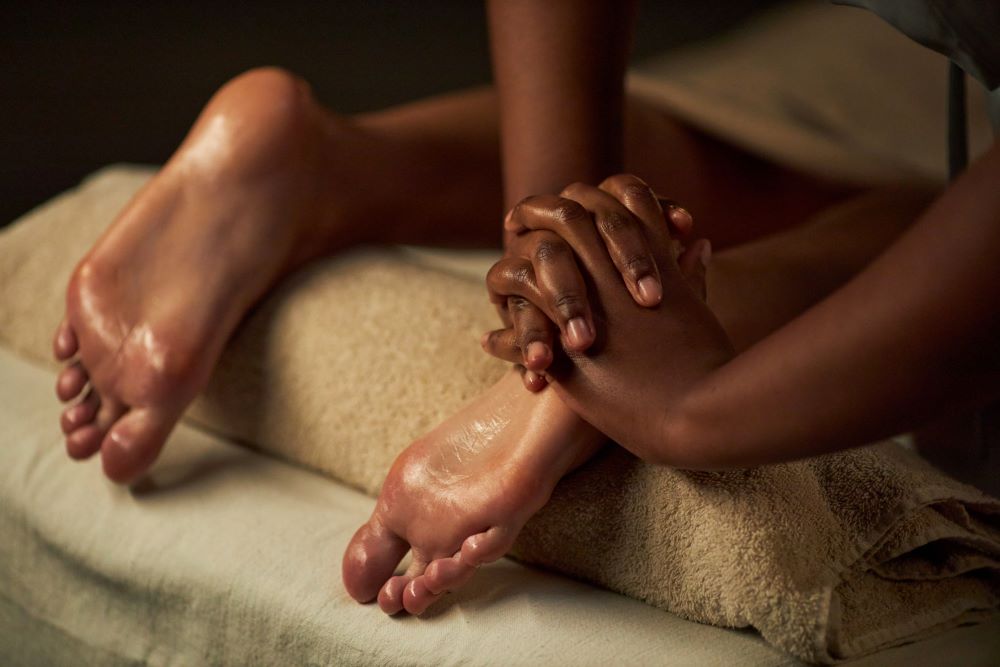
Sometimes the mouth says “I’m fine,” while the body is waving a giant red flag. Breathing goes shallow. Shoulders lock up. Everything gets rigid.
I once worked with a woman who swore she loved deep pressure. Every time I used it, she’d quietly drift away — not in a relaxed way, but in that far-off, disconnected place. Her mind had trained itself to push past the discomfort. Her nervous system never agreed.
In somatic work, the body’s truth always gets the final word — even when it contradicts the one coming out of your mouth.
Who Benefits Most From Somatic Safety Touch
Different conditions respond to somatic safety work in unique ways. Here’s what I’ve witnessed in my practice — how the body begins to trust again, and the shifts that follow when your nervous system finally feels permission to let go.
| Condition | Why Somatic Safety Helps | What I’ve Observed |
|---|---|---|
| Complex PTSD | Restores body ownership and safety | Clients slowly reconnect with physical sensations they’d shut down |
| Chronic Pain | Breaks the pain-tension-fear cycle | Pain often decreases when nervous system calms |
| Panic/Anxiety | Provides nervous system regulation tools | Clients learn to catch anxiety before it spirals |
| Depression | Reconnects with body and aliveness | Movement and sensation return gradually |
| Sexual Trauma | Offers non-threatening positive touch | Helps separate touch from threat over time |

Coming Home to Your Body
Embodiment might sound like something from a wellness retreat, but it’s really simple: can you actually feel yourself from the inside? Are you living in your body — or just carrying it around while your mind runs the show?
For a lot of trauma survivors, leaving the body becomes second nature. If it’s never felt safe, why would you want to hang out there?
But here’s the hard truth: you can’t heal what you can’t feel. Sooner or later, the journey home to your own skin isn’t optional — it’s the work.
The Slow Return
Sometimes it’s not about “adding” anything — it’s about uncovering what’s been there all along. A man might walk into my space barely aware of his own body. He moves like he’s only half here.
Session by session, more of him shows up. His breath drops lower. His shoulders settle. His legs remember they exist. One day, without even realizing it, he’s grounded from head to toe. And you can see it in the way he stands — he’s home.

Grounding: More Than Just Feeling Your Feet
Grounding isn’t always about planting your feet on the floor and calling it a day. It’s about giving your nervous system something solid to hold onto when emotions start to run the show.
For some men, it’s the feel of their back pressing into the table. For others, it’s the slow, steady rhythm of their breath. I’ve even worked with men who found grounding through the weight of their hands gripping the edge of the table.
Your body already knows its anchor points. My job is to help you find
Building Your Toolkit for Real Life
The point isn’t to rely on me forever — it’s to leave with skills you can use on your own.

Breath as Fuel
Breathing isn’t just about oxygen. Different patterns send different signals to your nervous system. Slow, steady exhales tell your body it’s safe. But if you’re already in full fight-or-flight, “just breathe” can feel useless. Sometimes we need to work around the breath first.
Movement as a Reset Button
Your body talks through movement. Trauma can shut that conversation down, making you feel stiff, locked up, disconnected.
Small, simple motions — rolling your shoulders, loosening your neck, even tapping your fingers — can help release the charge. The trick is to notice what your body’s asking for… and let it happen.
Boundaries That Actually Work
Many trauma survivors struggle with boundaries because their early boundary violations were so severe. Learning to sense your energetic edges, to feel what’s “yours” versus “not yours,” takes practice.
One client described finally feeling her boundaries as “like having skin again.”
The Messy Reality of Healing
Here’s what nobody tells you about trauma recovery: it’s not linear. You don’t just get better and stay better.
Some days you’ll feel like you’ve made real progress. Other days you’ll wonder if anything has actually changed. Both are completely normal parts of the healing process.
I’ve had clients “graduate” from therapy only to come back months later when life stress triggered old patterns. This isn’t failure, it’s maintenance. Like going to the dentist or getting your car serviced.
Finding Your People
Not every practitioner understands somatic safety. Some are still stuck in the “no pain, no gain” mentality that can actually retraumatize sensitive nervous systems.
Ask potential therapists about their trauma training. Do they understand nervous system responses? Can they work with dissociation? Are they comfortable with emotional releases?
Trust your gut. If someone’s energy doesn’t feel safe, it probably isn’t regardless of their credentials.
What’s Next for Touch Therapy
The field is evolving rapidly as we understand more about trauma and the nervous system. NeuroAffective Touch integrates cutting-edge neuroscience with hands-on healing. Some practitioners are combining EMDR with bodywork for deeper processing.
But honestly? Sometimes the oldest approaches work best. Indigenous healing traditions have always understood that trauma lives in the body. We’re just catching up.

Your Next Steps
If you’re considering somatic touch therapy, start with someone who gets trauma. Look for practitioners trained in approaches like Somatic Experiencing, Hakomi, or trauma-informed bodywork.
Expect the first session to involve lots of talking and maybe very little touch. Good practitioners spend time understanding your history and nervous system patterns before putting hands on you.
Most importantly: trust your body’s responses. If something doesn’t feel right, it probably isn’t. Your nervous system has kept you alive this long, it deserves to be heard.
Real Questions from Real People
“How do I know if a therapist is actually trauma-informed or just says they are?”
Ask specific questions: How do they handle dissociation? What do they do if someone has a panic attack during session? Do they understand the nervous system states? Vague answers are red flags.
“Will I definitely have emotional releases?”
Maybe, maybe not. Some people cry, others shake, some just feel deeply peaceful. Your body will do what it needs to do. Good practitioners support whatever arises without forcing anything.
“I’ve tried massage before and it made things worse. Could this be different?”
Absolutely. Traditional massage often misses the nervous system piece entirely. Somatic approaches work with your body’s protective responses instead of overriding them.
“How long does this take to work?”
Healing happens in layers. Some people feel shifts immediately, others need months to feel safe enough to let their guard down. There’s no timeline only your body’s wisdom.
The Touch That Actually Heals
After fifteen years of this work, I’ve learned that the most powerful healing happens when we finally stop fighting our bodies and start listening to them instead.
Your nervous system isn’t broken, it’s protective. Those stress responses that seem so inconvenient? They’ve kept you alive. The goal isn’t to eliminate them, but to help your body learn that safety is possible again.
The right kind of touch can be medicine. But it has to be the right kind, informed by science, guided by compassion, and respectful of your body’s profound wisdom.
Sarah, that client who used to freeze at the slightest touch? She’s teaching yoga now. “I finally live in my whole body,” she told me recently. “All of it. Even the scary parts.”
That’s what somatic safety looks like in real life. Not perfection, just coming home to yourself.

Ready to explore what somatic safety might offer your healing journey? Start by listening to your body right now. What does it need? What does it want to tell you? That conversation is where everything begins.